-
-
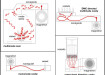
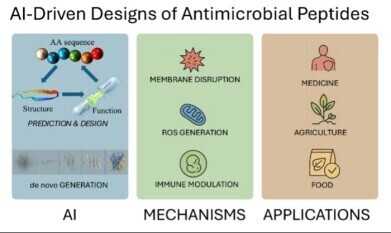 This schematic illustrates the AI-powered pipeline for designing novel antimicrobial peptides (AMPs). Through sequence and structure modeling, AI models enable rational design and de novo generation of AMPs with diverse functions, including membrane disruption, ROS generation, and immune modulation. These peptides show broad applications across medicine, agriculture, and the food industry. Credit: Food & Medicine Homology, Tsinghua University Press
Research news
Nanotechnology and artificial intelligence combine to transform antimicrobial peptide research and delivery
Oct 10 2025
Scientists in China have reported major advances in the design of antimicrobial peptides, with artificial intelligence and nanotechnology enabling potent, stable therapies that could counter antibiotic resistance and extend into agriculture and food preservation
As global concerns about antimicrobial resistance continues to intensify, researchers have increasingly turned to antimicrobial peptides (AMPs) – natural defence molecules produced by organisms across the tree of life – as promising therapeutic alternatives. Despite their potential, the clinical application of AMPs has long been constrained by toxicity, instability, and poorly understood mechanisms of action.
A recently published opinion article published in Food & Medicine Homology, called ‘Harnessing innovations in antimicrobial peptide design: from AI-driven discovery to precision targeting mechanisms’, highlighted how artificial intelligence (AI), nanotechnology, and interdisciplinary approaches are reshaping the field.
The article was authored by researchers from institutions including Zhejiang University, Hangzhou; Dalian University of Technology, Liaoning Province; Ocean University of China, Qingdao in Shandong Province, the Chinese Academy of Sciences, Beijing; and Guizhou Medical University, Guiyang all in China, outlined substantial advances in the rational design, optimisation and delivery of AMPs.
“AI-driven design frameworks can now generate highly effective AMPs in a matter of days, significantly shortening the development cycle,” said Dr. Jin Zhang, the corresponding author for the paper and an associate professor at Guizhou Medical University.
“We are moving toward a future where we can design peptides with tailored functions – whether to kill pathogens, modulate immunity or promote tissue repair,” Zhang added.

Chinese researchers develop AI model to design antibodies by combining sequence and structural data
Researchers have developed a novel artificial intelligence model – S2ALM – that integrates sequence and structural data to design antibodies with greater accuracy, paving the way for... Read More
One striking example came from Zhejiang University, where scientists used a combination of protein language models and reinforcement learning to design 18 broad-spectrum AMPs in just 11 days. The peptides displayed potent antimicrobial activity against multidrug-resistant bacteria at concentrations in the low micrograms per millilitre range, and in vitro serial passaging experiments showed no significant resistance development.
At Guizhou Medical University, researchers have developed a rational design platform for antifungal peptides that combines machine learning with multi-objective optimisation.
“We successfully predicted and validated peptides that disrupt both fungal membranes and mitochondrial function. This dual mechanism greatly reduces the chance of resistance,” Zhang explained.
Nanotechnology has also become central to AMP delivery. Teams at the Chinese Academy of Sciences created an enzyme-responsive hydrogel capable of releasing AMPs on demand in bone marrow infections, while researchers at Fuzhou University developed metal–peptide complexes that not only generate reactive oxygen species to kill bacteria but also accelerate wound healing.
AMPs are also being investigated as environmentally sustainable pesticides in agriculture and as natural preservatives in the food industry.
“Their multifunctionality makes them ideal candidates for sustainable solutions across sectors,” said Ning-Xian Yang, first author of the article and a professor at Guizhou Medical University.
The authors noted that future progress will depend on the integration of AI, multi-omics, synthetic biology and smart materials to improve cost-efficiency, stability and monitoring of resistance.
“We are working toward low-cost production, enhanced stability, and long-term resistance monitoring. The goal is to translate these innovations into safe, effective, and accessible therapies,” Yang added.
For further reading please visit: 10.26599/FMH.2025.9420121



Digital Edition
Lab Asia Dec 2025
December 2025
Chromatography Articles- Cutting-edge sample preparation tools help laboratories to stay ahead of the curveMass Spectrometry & Spectroscopy Articles- Unlocking the complexity of metabolomics: Pushi...
View all digital editions







Events
Jan 21 2026 Tokyo, Japan
Jan 28 2026 Tokyo, Japan
Jan 29 2026 New Delhi, India
Feb 07 2026 Boston, MA, USA
Asia Pharma Expo/Asia Lab Expo
Feb 12 2026 Dhaka, Bangladesh